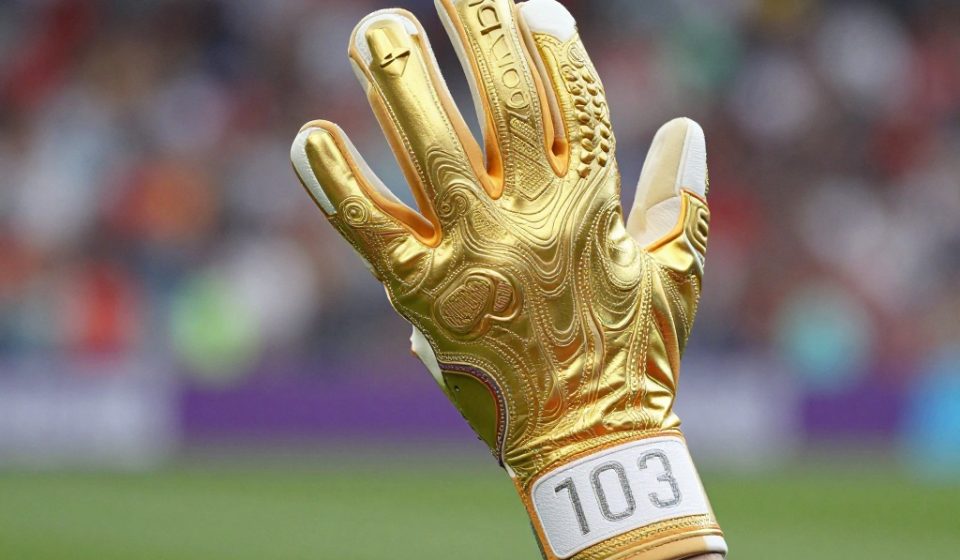

As World Cup 2026 reaches its final stages, one question dominates the conversation: who has been the tournament’s best goalkeeper? The Golden Glove award recognizes the standout keeper of the competition, and this year’s race is one of the most competitive in recent memory. From established stars like Alisson Becker and Diogo Costa to surprise performers like Vozinha and Eloy Room, the tournament has produced no shortage of heroic displays between the posts.
The Golden Glove criteria
The Golden Glove is not awarded based on a single metric. FIFA considers a combination of factors: total saves, save percentage, clean sheets, goals prevented, distribution accuracy, and overall impact on matches. A goalkeeper who makes 30 saves but concedes 10 goals may have a lower save percentage than one who makes 15 saves and concedes 2. Both matter, but context matters more.
This year, the race is particularly tight because several keepers have excelled in different areas. Some lead in total saves, others in save percentage, and others in clean sheets. The winner will likely be the goalkeeper who combined the best statistical performance with the most impactful moments in crucial matches.
The statistical leaders
In terms of raw saves, Eloy Room (Curaçao) leads the tournament with 20 saves across three group-stage matches. His 15-save performance against Ecuador was one of the standout individual displays of the entire tournament, paralleling Tim Howard’s 2014 record. However, Curaçao did not advance beyond the group stage, which may hurt Room’s chances in the final voting.
Orlando Gill (Paraguay) sits near the top with 19 saves, including two penalty saves in the shootout against Germany. Gill’s tournament ended in the Round of 16, but his penalty heroics against one of the world’s best teams will be remembered as one of the defining moments of the competition.
Vozinha (Cabo Verde) has made 18 saves, including a seven-save performance against Spain where he faced 28 shots. At 40 years old, Vozinha’s tournament has been a masterclass in longevity and shot-stopping. His save percentage is among the highest in the competition, and he kept Cabo Verde competitive in every match.
Among the keepers still in the tournament, Diogo Costa (Portugal) leads with a save percentage above 80 percent and multiple clean sheets. Costa has been the foundation of Portugal’s defensive solidity, and his distribution has been among the best in the competition. Gregor Kobel (Switzerland) and Yassine Bounou (Morocco) are also strong contenders, with Kobel recording 13 saves and multiple clean sheets, and Bounou continuing his reputation as one of the world’s most reliable penalty-stopppers.
The clean sheet leaders
Clean sheets remain one of the most important metrics for Golden Glove consideration. Alisson Becker (Brazil) recorded four clean sheets before Brazil’s elimination, conceding only two goals across five matches. His distribution and command of the penalty area were exceptional, and he made several crucial saves in Brazil’s knockout match.
Mike Maignan (France) has three clean sheets in the tournament, including a crucial performance in the Round of 16 against Paraguay. Maignan’s shot-stopping has been reliable, and his ability to play out from the back has been a key part of France’s tactical system. If France reaches the final, Maignan’s chances of winning the Golden Glove increase significantly.
Ederson (Brazil), despite being a backup, recorded two clean sheets in limited minutes, showcasing the depth of Brazil’s goalkeeping options. His distribution remains among the best in the world, and his long passing has been a weapon for Brazil in transitioning from defense to attack.
The penalty specialists
Penalty saves often define Golden Glove races, and this tournament has produced several memorable moments. Orlando Gill’s two saves against Germany in the shootout were historic, ending Germany’s perfect World Cup shootout record. Emiliano Martinez (Argentina) saved one penalty in the Round of 32, continuing his reputation as one of the world’s best shootout goalkeepers.
Yassine Bounou (Morocco) saved one penalty in the group stage and has been Morocco’s most reliable player in tight matches. His ability to read takers and his proactive positioning have made him one of the most feared penalty-stopppers in the competition.
Diogo Costa (Portugal) also saved one penalty in the tournament, and his calmness under pressure has been a key factor in Portugal’s success. Costa’s penalty record, combined with his overall save percentage, makes him one of the strongest candidates for the Golden Glove.
The distribution leaders
Modern goalkeeping is not just about shot-stopping. Distribution has become increasingly important, and several keepers have excelled in this area. Alisson Becker (Brazil) completed 87.5 percent of his passes in the tournament, and his long passing has been a weapon for Brazil in transitioning from defense to attack.
Ederson (Brazil) recorded 42 accurate goal kicks, the most in the tournament, showcasing his ability to start attacks from the back. His distribution has been a key part of Brazil’s tactical system, and his long passing has created several scoring opportunities.
Diogo Costa (Portugal) has also excelled in distribution, completing 85 percent of his passes and averaging 30 accurate goal kicks per match. Costa’s ability to play out from the back has been a key factor in Portugal’s success, and his distribution has been among the best in the competition.
The impact players
Beyond the statistics, some goalkeepers have had an outsized impact on their team’s performance. Eloy Room (Curaçao) kept his team competitive in every match despite facing overwhelming pressure. His 15-save performance against Ecuador was one of the standout individual displays of the tournament, and his leadership was crucial for Curaçao’s historic World Cup debut.
Vozinha (Cabo Verde) has been the heart of his team’s defense, and his performances have inspired Cabo Verde to compete with much larger nations. At 40 years old, his tournament has been a masterclass in longevity and shot-stopping, and his impact on the tournament extends beyond the statistics.
Orlando Gill (Paraguay) carried his team to the Round of 16 with his penalty heroics against Germany, and his performances have put Paraguayan football on the map. His two penalty saves against one of the world’s best teams will be remembered as one of the defining moments of the competition.
The top five contenders
Based on the combination of statistics, impact, and overall performance, here are the top five contenders for the Golden Glove at World Cup 2026:
- Diogo Costa (Portugal) – Best combination of saves, clean sheets, save percentage, and distribution. Still in the tournament, which gives him a chance to add more heroic moments.
- Alisson Becker (Brazil) – Four clean sheets, exceptional distribution, and crucial saves in high-pressure matches. Brazil’s elimination hurts his chances, but his overall performance has been outstanding.
- Mike Maignan (France) – Three clean sheets, reliable shot-stopping, and excellent distribution. If France reaches the final, Maignan becomes a strong favorite.
- Yassine Bounou (Morocco) – One penalty save, multiple clean sheets, and a reputation as one of the world’s best penalty-stopppers. Morocco’s tactical solidity has been built on his reliability.
- Eloy Room (Curaçao) – Tournament-leading 20 saves, historic 15-save performance against Ecuador, and a leadership role in Curaçao’s World Cup debut. His team’s early elimination hurts his chances, but his individual performance has been exceptional.
The dark horses
Beyond the top five, several other goalkeepers have put together strong tournaments and could surprise in the final voting:
- Gregor Kobel (Switzerland) – 13 saves, multiple clean sheets, and a reputation as one of the most reliable goalkeepers in Europe.
- Orlando Gill (Paraguay) – 19 saves, two penalty saves, and a historic performance against Germany. His team’s elimination in the Round of 16 limits his chances, but his impact has been undeniable.
- Vozinha (Cabo Verde) – 18 saves, among the highest save percentages in the tournament, and a masterclass in longevity at 40 years old.
- Bart Verbruggen (Netherlands) – 16 saves, multiple clean sheets, and a breakout tournament for the young goalkeeper.
- Unai Simon (Spain) – Reliable shot-stopping, excellent distribution, and a key part of Spain’s tactical system.
The final verdict
If the Golden Glove were awarded today, Diogo Costa would be the favorite. His combination of saves, clean sheets, save percentage, and distribution is unmatched, and Portugal’s continued presence in the tournament gives him a chance to add more heroic moments. However, the race is far from over.
If Mike Maignan keeps France in the final and records another clean sheet, he could overtake Costa. If Yassine Bounou leads Morocco to a semifinal or final appearance, his penalty-saving reputation and reliability could make him the winner. And if Alisson Becker or another top goalkeeper has a standout performance in the final, they could also jump into contention.
One thing is certain: the Golden Glove race at World Cup 2026 has been one of the most competitive in recent memory. From established stars to surprise performers, the tournament has produced no shortage of heroic displays between the posts. The winner will be the goalkeeper who combined the best statistical performance with the most impactful moments in the most crucial matches.
What this means for the future
The Golden Glove race at World Cup 2026 has highlighted several trends in modern goalkeeping. First, the importance of distribution has never been greater. The top contenders have all excelled in playing out from the back and starting attacks from the goalkeeper position. Second, penalty-saving ability remains a key differentiator, with several keepers making crucial saves in high-pressure moments. Third, longevity and experience still matter, as evidenced by the performances of 40-year-old Vozinha and 37-year-old Eloy Room.
For young goalkeepers watching this tournament, the lesson is clear: the modern goalkeeper must be a complete footballer. Shot-stopping is essential, but distribution, communication, and mental strength are equally important. The winner of the Golden Glove at World Cup 2026 will be the goalkeeper who best embodies all of these qualities.
FAQs about the Golden Glove race
Who is leading the Golden Glove race at World Cup 2026?
Diogo Costa (Portugal) is currently the favorite, with the best combination of saves, clean sheets, save percentage, and distribution among goalkeepers still in the tournament.
Which goalkeeper has made the most saves at World Cup 2026?
Eloy Room (Curaçao) leads the tournament with 20 saves, followed by Orlando Gill (Paraguay) with 19 and Vozinha (Cabo Verde) with 18.
Which goalkeeper has the most clean sheets?
Alisson Becker (Brazil) recorded four clean sheets before Brazil’s elimination, followed by Mike Maignan (France) and Diogo Costa (Portugal) with three each.
Who has the best save percentage?
Diogo Costa (Portugal) leads with a save percentage above 80 percent, followed by Vozinha (Cabo Verde) and Alisson Becker (Brazil).
Can a goalkeeper from an eliminated team win the Golden Glove?
Yes, it has happened before. However, it is rare, as the award typically favors goalkeepers whose teams have advanced deep into the tournament. Eloy Room and Vozinha have strong individual performances, but their teams’ early eliminations may hurt their chances.
The legacy of World Cup 2026 goalkeeping
World Cup 2026 will be remembered as a tournament that showcased the full spectrum of modern goalkeeping. From the traditional shot-stopping mastery of Eloy Room and Vozinha to the distribution excellence of Alisson and Diogo Costa, the competition has highlighted what it takes to be a world-class goalkeeper in the modern era.
The Golden Glove winner will be the goalkeeper who best embodied all of these qualities — the complete footballer who could stop shots, distribute accurately, command the penalty area, and perform under pressure. That is the standard that World Cup 2026 has set, and it is the standard that future generations of goalkeepers will strive to match.