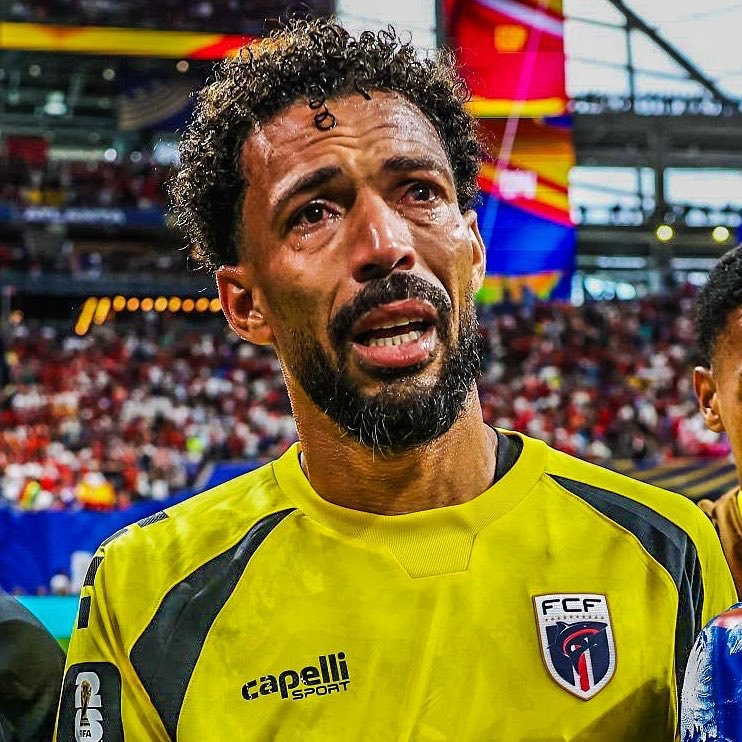

Cape Verde’s 40-year-old goalkeeper Vozinha and Saudi Arabia’s Mohammad Al-Owais have emerged as the standout performers at the 2026 FIFA World Cup, combining to make the most saves in the tournament while proving that traditional shot-stopping still matters in modern football. Vozinha recorded seven saves against Spain despite Spain registering 28 attempts, while Al-Owais made nine saves against Uruguay in Saudi Arabia’s stunning draw. Both goalkeepers have the best save percentages at the tournament, challenging the narrative that only young sweeper-keepers can succeed at the highest level.
Who is Vozinha and why is he viral at World Cup 2026?
Vozinha is the jersey name of Cape Verde’s 40-year-old goalkeeper, whose full career name has been used throughout his club career. Born in Sao Vicente, Cape Verde, he became the toast of World Cup 2026 after his performance against one of football’s strongest nations.
In Cape Verde’s match against Spain on June 15, 2026, Vozinha faced 28 attempted shots from Spain—one of the most attacking displays against a single goalkeeper in recent World Cup history. Despite this overwhelming pressure, he made seven saves and helped secure a draw in what became one of the standout goalkeeper performances of the tournament.
The match was part of a draw-filled day at World Cup 2026 where all four games on June 15 ended in ties, with Spain against Cape Verde providing the biggest surprise of the day.
Mohammad Al-Owais: The Saudi goalkeeper with nine saves
Saudi Arabia’s Mohammad Al-Owais made nine saves against Uruguay, the highest number of saves by any goalkeeper in the 2026 World Cup tournament. Saudi Arabia also secured a draw against Uruguay, joining the pattern of Group G and Group H matches where all eight teams came away with one point.
Al-Owais’s performance was part of what commentators described as stellar goalkeeping in Group H, which has been one of the most exciting groups to watch at the World Cup specifically because of the goalkeeper performances leading the way.
Why veteran goalkeepers are dominating World Cup 2026
The 2026 World Cup has become a tournament for football’s oldest warriors, particularly among goalkeepers. The mean age of all 145 goalkeepers at this World Cup is 29 years and 298 days. Of these, 77 goalkeepers are older than the average, and 25 are aged 35 and above.
This stands in contrast to the modern football trend that has emphasized younger, more athletic goalkeepers who can act as sweeper-keepers—goalkeepers who venture outside their box to play like an extra defender and participate in build-up play.
Vozinha at 40 and Manuel Neuer of Germany, also 40, represent the veteran presence at the tournament. Neuer became only the second German player to appear at five World Cups, with 20 total World Cup games. He had retired from international football after Euro 2024 but reversed that decision to return for World Cup 2026.
Traditional shot-stopping vs the sweeper-keeper revolution
For generations, the goalkeeper was defined primarily by one metric: saves. They were reactive specialists confined to their 18-yard box. In the modern game, that perception has been shattered. The sweeper-keeper revolution, led by Manuel Neuer, Alisson Becker, and Ederson, transformed goalkeepers into playmakers who must make accurate short passes and long balls.
Serie A goalkeeper pass completion has risen from 50 percent in the late 2000s to 70 percent now, reflecting this evolution. Modern goalkeepers like David Raya at Arsenal are described as leading the sweeper-keeper era with clinical distribution and elite save percentages.
However, Vozinha and Al-Owais’s success at World Cup 2026 proves that traditional shot-stopping—the ability to make saves under overwhelming pressure—still wins matches. Spain’s 28 attempts against Cape Verde and Uruguay’s sustained attack against Saudi Arabia tested pure reflex and positioning rather than distribution skills.
Both goalkeepers have the best save percentages at the tournament, demonstrating that when faced with volume shooting, the ability to stop the ball matters more than passing accuracy.
How save statistics work at World Cup 2026
Save percentage is calculated by dividing the number of saves by the total number of shots on target faced. A goalkeeper who faces 10 shots and makes 8 saves has a 80 percent save percentage.
At World Cup 2026, Vozinha’s seven saves from Spain’s attempts and Al-Owais’s nine saves against Uruguay represent the highest individual save counts in the tournament. This contrasts with the 2022 World Cup, where Croatia’s Dominik Livakovic finished with 25 saves across the entire tournament as Croatia reached the semi-finals.
The difference reflects that World Cup 2026 is still in its early group stage, while Livakovic’s 25 saves accumulated over seven matches including knockout rounds.
What this means for goalkeeper development
The success of veteran goalkeepers at World Cup 2026 has practical implications for goalkeeper coaches and players. It suggests that while the sweeper-keeper model dominates team tactics, pure shot-stopping ability remains essential for tournament success.
For households and fans watching the tournament, this means the most dramatic moments often come from traditional saves rather than distribution stats. For young goalkeepers training, it suggests that both skills—shot-stopping and passing—must be developed, as different situations require different abilities.
Positioning remains the most underrated goalkeeper skill. Micro-adjustments based on attack angle, the shooter’s preferred foot, and field conditions determine whether a goalkeeper starts from the right spot. Catching crosses reduces scoring chances by 18 percent compared to punching, according to Premier League statistics. These fundamentals matter regardless of whether a goalkeeper is 22 or 40.
Other notable goalkeepers at World Cup 2026
Beyond the veteran standouts, several other goalkeepers have made impacts at the tournament:
Alisson Becker (Brazil): Expected to start for Brazil at World Cup 2026, Alisson finished with three saves against Haiti, two from inside the box, against shots on target worth 0.43 expected goals (xG). He completed 28 of 32 passes, demonstrating the modern sweeper-keeper’s dual capability. Alisson also won his only ground duel and completed his dribble in the game, showing all-round quality.
Thibaut Courtois (Belgium): Remains described as the world’s most commanding presence through sheer shot-stopping reach for Real Madrid, maintaining status as a titan despite the sweeper-keeper trend.
Manuel Neuer (Germany): After Germany’s commanding 7-1 win over competition debutants Curacao in their World Cup opener in Houston, some fans questioned whether Neuer should start against bigger opponents, with comments like sit out against big opponents and he is washed appearing online. Despite this criticism, Neuer remains Germany’s number one goalkeeper for the tournament.
FAQs about veteran goalkeepers at World Cup 2026
Who has the most saves at World Cup 2026?
Mohammad Al-Owais of Saudi Arabia has the most saves with nine against Uruguay. Vozinha of Cape Verde follows with seven saves against Spain.
How old is Vozinha from Cape Verde?
Vozinha is 40 years old, making him one of the oldest goalkeepers at World Cup 2026 alongside Manuel Neuer of Germany, who is also 40.
Why are veteran goalkeepers succeeding at World Cup 2026?
Veteran goalkeepers like Vozinha and Al-Owais succeed because they excel at traditional shot-stopping—making saves under overwhelming pressure. Both have the best save percentages at the tournament, proving that stopping the ball matters more than distribution when facing volume shooting.
What is a sweeper-keeper and how is it different from traditional goalkeeping?
A sweeper-keeper is a goalkeeper who ventures outside their box to act as an extra defender, playing like an outfield player. They make accurate short and long passes as part of team build-up. Traditional goalkeeping focuses primarily on shot-stopping and staying within the goal area.
How many goalkeepers are at World Cup 2026 and what is their average age?
There are 145 goalkeepers at World Cup 2026 across all 48 teams. Their mean age is 29 years and 298 days, with 25 goalkeepers aged 35 and above.
Did Manuel Neuer retire from international football?
Yes, Neuer retired from international football after Euro 2024 but reversed that decision to return for World Cup 2026. He was named Germany’s starting goalkeeper for the tournament.
The staying power of experience
Vozinha’s seven saves against Spain’s 28 attempts and Al-Owais’s nine saves against Uruguay represent more than statistical outliers. They demonstrate that at the highest level of football, when facing sustained attacking pressure, the fundamental ability to stop the ball remains paramount.
The 2026 World Cup shows that while the sweeper-keeper revolution has transformed team tactics, traditional shot-stopping still defines tournament success. For coaches developing young goalkeepers, the lesson is clear: master both passing and saving, as different situations demand different skills.
For fans watching the tournament, the veteran goalkeepers provide some of the most dramatic moments. When a 40-year-old stands against 28 attempts from one of the world’s strongest nations and secures a draw, it reminds us that experience and reflex still matter in modern football.