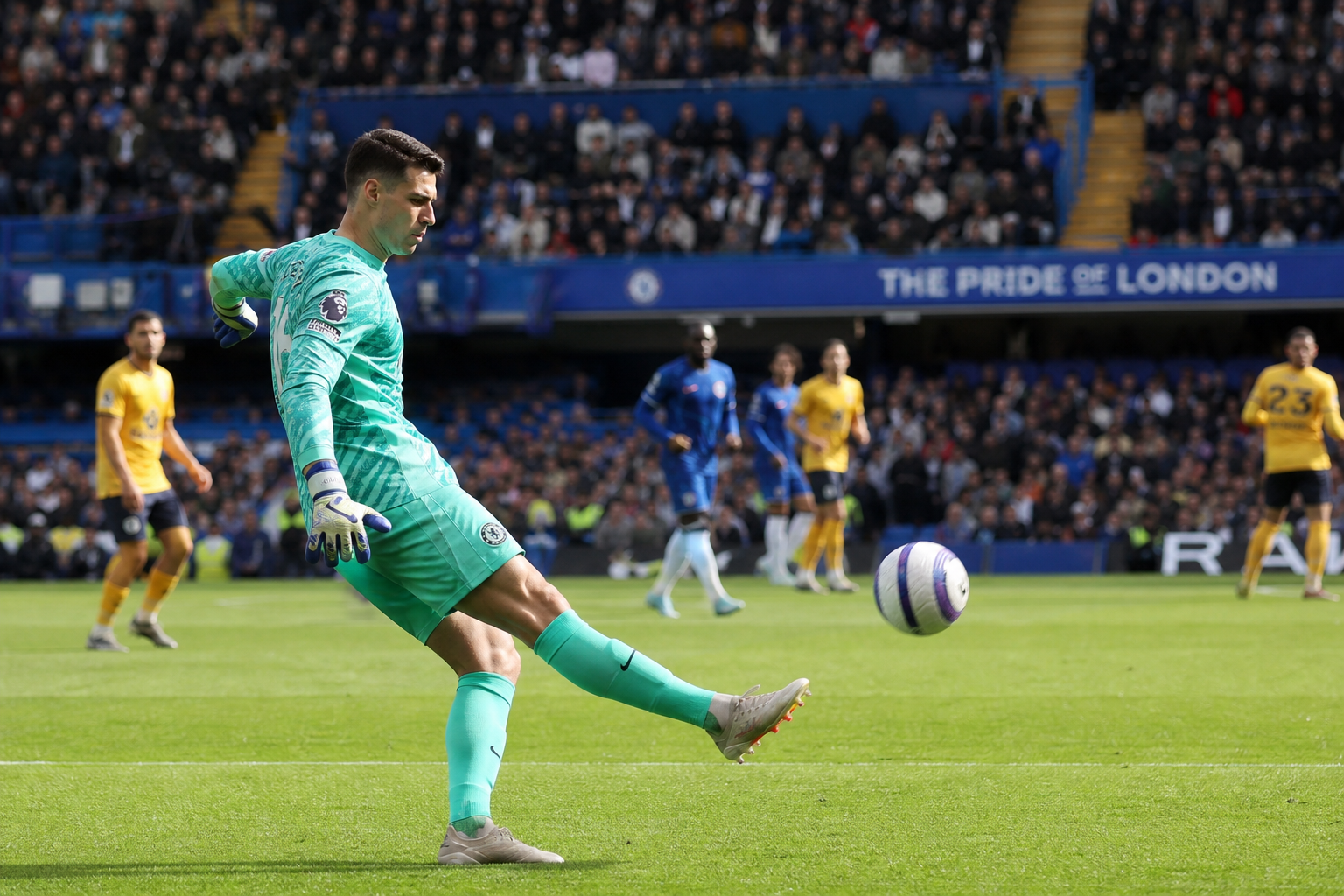

Goalkeeper distribution has become one of the most important parts of the modern game. What used to be a simple restart after a save is now a major tactical tool that can shape how a team builds attacks, beats pressure, and controls territory. The change has been gradual, but it has altered the job of the goalkeeper more than almost any other role on the pitch.
What goalkeeper distribution means
Goalkeeper distribution is the way a goalkeeper puts the ball back into play after gaining possession. That can include short passes to defenders, thrown releases, long kicks, driven balls into space, or clipped passes into midfield. In the past, it was mainly about clearing danger. Today, it is often the start of a team’s attacking phase.
The modern game asks goalkeepers to make choices much faster than before. They have to see pressing patterns, understand where teammates are positioned, and decide whether to play short or long under pressure. A good distribution can help a team keep possession and move up the pitch; a poor one can hand the opponent another attack.
Why it became so important
The rise of pressing systems changed everything. Teams now press aggressively from the front, trying to trap opponents near their own box. That means a goalkeeper must be comfortable receiving the ball with opponents closing in and must be able to release it accurately under pressure.
Coaches also began to use goalkeepers as an extra passing option. When a team builds from the back, the goalkeeper can create an overload and give defenders more time on the ball. This made distribution a tactical weapon rather than just a restart method.
As a result, clubs began judging goalkeepers differently. A keeper who could only save shots but could not pass cleanly started to look limited in systems that relied on controlled build-up play. This shift has influenced recruitment, training, and even how young goalkeepers are taught.
How the role changed
In older football, goalkeepers were mainly expected to stop shots, catch crosses, and clear their lines. Distribution mattered, but it was not usually the defining feature of the role. A long clearance into the opponent’s half was often considered enough.
Now the role is broader. Goalkeepers are expected to initiate attacks, stay calm under pressure, and often act as a spare outfield player when a team is building from deep. This has led to the rise of the sweeper-keeper, a goalkeeper who can move outside the box and help manage space behind a high defensive line.
This change has also made the position more technical. Goalkeepers need clean footwork, a variety of passing angles, and the confidence to play through pressure. The best ones combine those skills with the ability to make big saves when the game turns chaotic.
Short passing and build-up play
Short distribution is now central to many teams’ attacking plans. Goalkeepers often play to a centre-back, full-back, or holding midfielder to help their side keep the ball. This approach can pull opponents out of shape and open passing lanes higher up the pitch.
Short passing also helps teams manage the tempo of a match. If the goalkeeper can keep the ball moving cleanly, the team can calm the game down after a scare or control possession when needed. That is especially useful against high-pressing opponents who want to force rushed decisions.
The risk is obvious: short passes can be intercepted if the build-up structure is poor. That is why successful teams train these patterns carefully. Distribution is not only about the goalkeeper’s technique; it depends on movement, spacing, and trust between teammates.
Long distribution as a weapon
Long passing is still important, but the purpose has changed. It is no longer only a defensive escape route. In many teams, the goalkeeper now uses long distribution to attack space behind a high line or to switch play quickly to a free winger.
A good long ball can change the rhythm of a match instantly. It can turn pressure into an advantage, especially if the opponent is committed forward. This is why some goalkeepers are valued not just for accuracy, but for the distance and variety they can generate from the back.
Long distribution also gives teams another way to bypass pressure. When an opponent presses too hard, a precise direct ball can expose the space they leave behind. The best goalkeepers read those moments early and release the ball before the chance disappears.
The sweeper-keeper effect
The sweeper-keeper style has pushed distribution even further. These goalkeepers do not simply restart possession; they often act as the first organiser of the team’s shape. They may sweep behind the defence, start attacks with their feet, and help maintain a high line.
This has become especially common in teams that want to dominate possession. If the goalkeeper can pass well, the team can keep a compact structure and move the ball around more confidently. That makes distribution part of the system rather than an isolated skill.
At the same time, the style has clear limits. A goalkeeper who ventures too far from goal can leave the team exposed. That means the role requires judgment as much as technique.
What coaches look for now
Coaches usually want a goalkeeper who can do three things well: receive the ball under pressure, make the right decision quickly, and execute the pass accurately. They also look for calmness, because distribution mistakes often happen when a goalkeeper rushes.
Training now often includes drills that simulate pressing, passing angles, and game-like decisions. Goalkeepers are not only working on shot-stopping; they are also working on body shape, first touch, and awareness. The best coaches treat distribution as a core skill rather than an extra.
That shift affects recruitment too. Teams may choose a slightly less spectacular shot-stopper if he is far better with the ball at his feet. In modern football, the goalkeeper’s role is linked to the team’s entire playing style.
Common misconceptions
One common misconception is that distribution only matters for possession-based teams. In reality, even direct or counter-attacking sides benefit from a goalkeeper who can hit accurate long passes. A good distribution game is useful in almost every tactical model.
Another misconception is that a goalkeeper must always play short to be modern. That is not true. The best goalkeepers choose the right option, not the same option every time. Sometimes a long ball is the smartest decision.
There is also a tendency to overrate highlight moments. A dramatic pass may attract attention, but consistent, safe, and well-timed distribution often matters more over the course of a match. Reliability usually beats flashiness.
Why it matters for young goalkeepers
Young goalkeepers now need to learn distribution early. It is no longer something added later if a coach has time. It is part of the role from the start.
That means practicing passing under pressure, understanding defensive shapes, and learning when to slow the game down or speed it up. It also means building confidence on both feet. A goalkeeper who can only use one foot is easier to press.
For young players, this creates more opportunities but also more demands. They must develop as technicians, not just shot-stoppers. That can be challenging, but it also makes the position more complete.
What happens when distribution goes wrong
When a goalkeeper misplaces a pass, the mistake is often more dangerous than a misplaced outfield pass. The ball is closer to goal, the defensive shape may be stretched, and the opponent can create a chance immediately. That is why poor distribution can be punished so quickly.
Some teams reduce this risk by simplifying the goalkeeper’s options. Others encourage risk because the reward of progressing through pressure is worth it. The right approach depends on the squad, the opposition, and the match situation.
In short, distribution is powerful but unforgiving. It can give a team control, or it can create disaster in seconds.
What readers should watch for
When watching a match, pay attention to more than just saves. Look at how the goalkeeper receives the ball, how often he plays short, when he goes long, and whether the passes are helping the team move forward. Those choices reveal a lot about the team’s tactical plan.
Also watch how opponents press the goalkeeper. Some teams deliberately try to force mistakes at the back. Others sit off and allow the keeper to play, knowing that possession alone does not always create danger.
The most effective goalkeepers are usually those who make the right decision more often than the risky one. That is what has made distribution such an important part of the modern game.
Why distribution defines the modern goalkeeper
Goalkeeper distribution is now one of the clearest signs of how football has changed. It reflects the rise of pressing, the importance of build-up play, and the growing expectation that every player should contribute to possession. The goalkeeper is no longer separate from the team’s tactical structure.
At the same time, the core of the role has not disappeared. A goalkeeper still has to save shots, handle crosses, and stay composed under pressure. Distribution has expanded the job, not replaced it.
That balance is what makes the position so interesting. The modern goalkeeper has to be both a shot-stopper and a passing outlet, which means the role now demands more skill, more awareness, and more decision-making than ever before.